
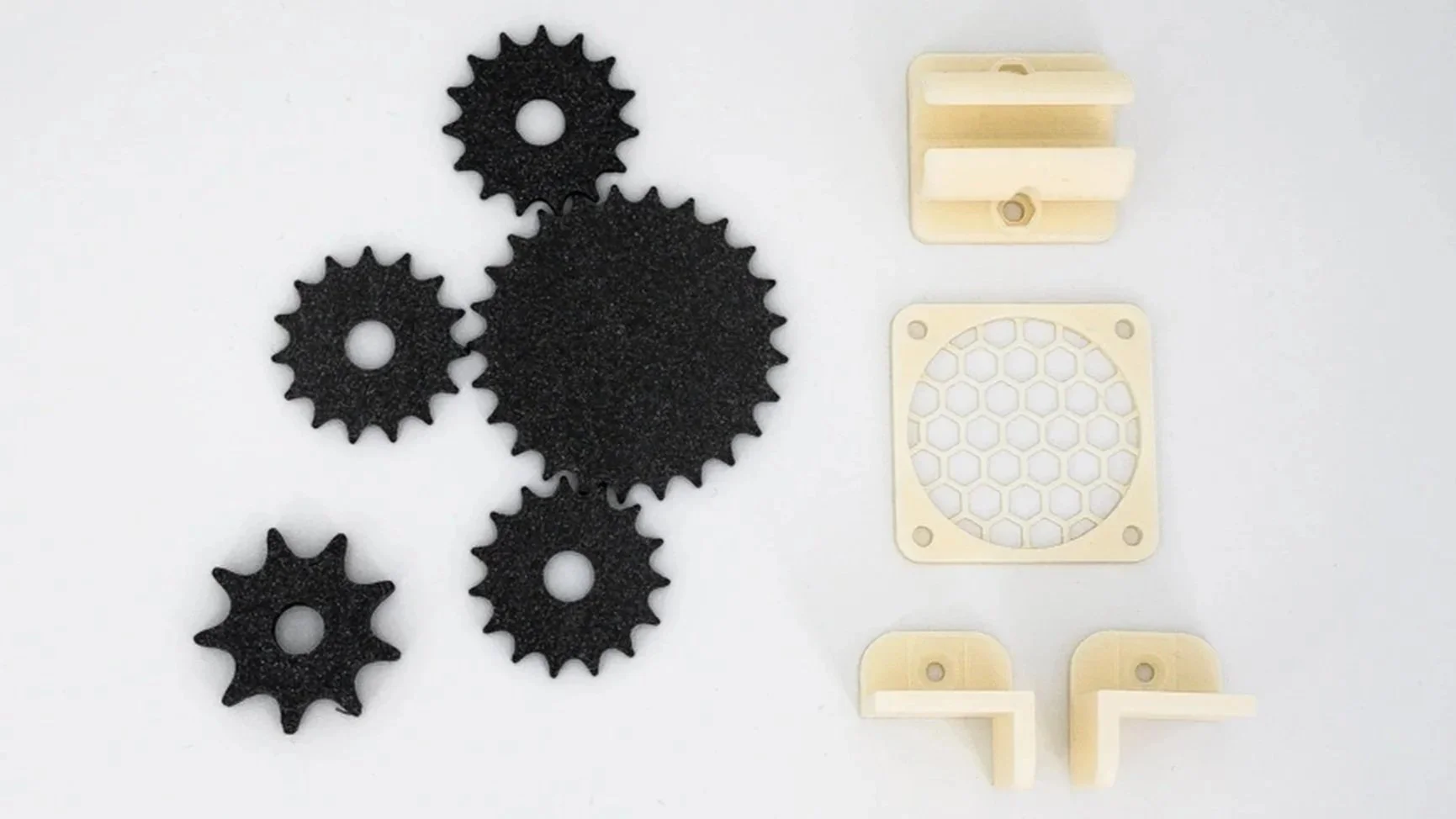
FDM 3D Printing Service in Sweden
We offer professional FDM 3D printing services for companies, focused on functional parts and production support.
Our service is suitable when you need:
Fast iteration without tooling
Low-volume production flexibility
Custom parts on demand
Cost-effective manufacturing support
What We Offer
Functional Prototyping
Rapid production of mechanically functional prototypes for testing, validation, and iteration.
Low-Volume Production
Small series manufacturing without molds or long lead times.
Jigs, Fixtures & Tooling
Custom tools for assembly, positioning, inspection, and process optimization.
Replacement & Legacy Parts
Production of discontinued or hard-to-source components.
Materials Guide
Selecting the right material is critical for functional performance.
We offer validated FDM materials for professional applications.
PLA — Polylactic Acid
Best for:
Prototypes, display models, detailed visual parts, low-stress applications
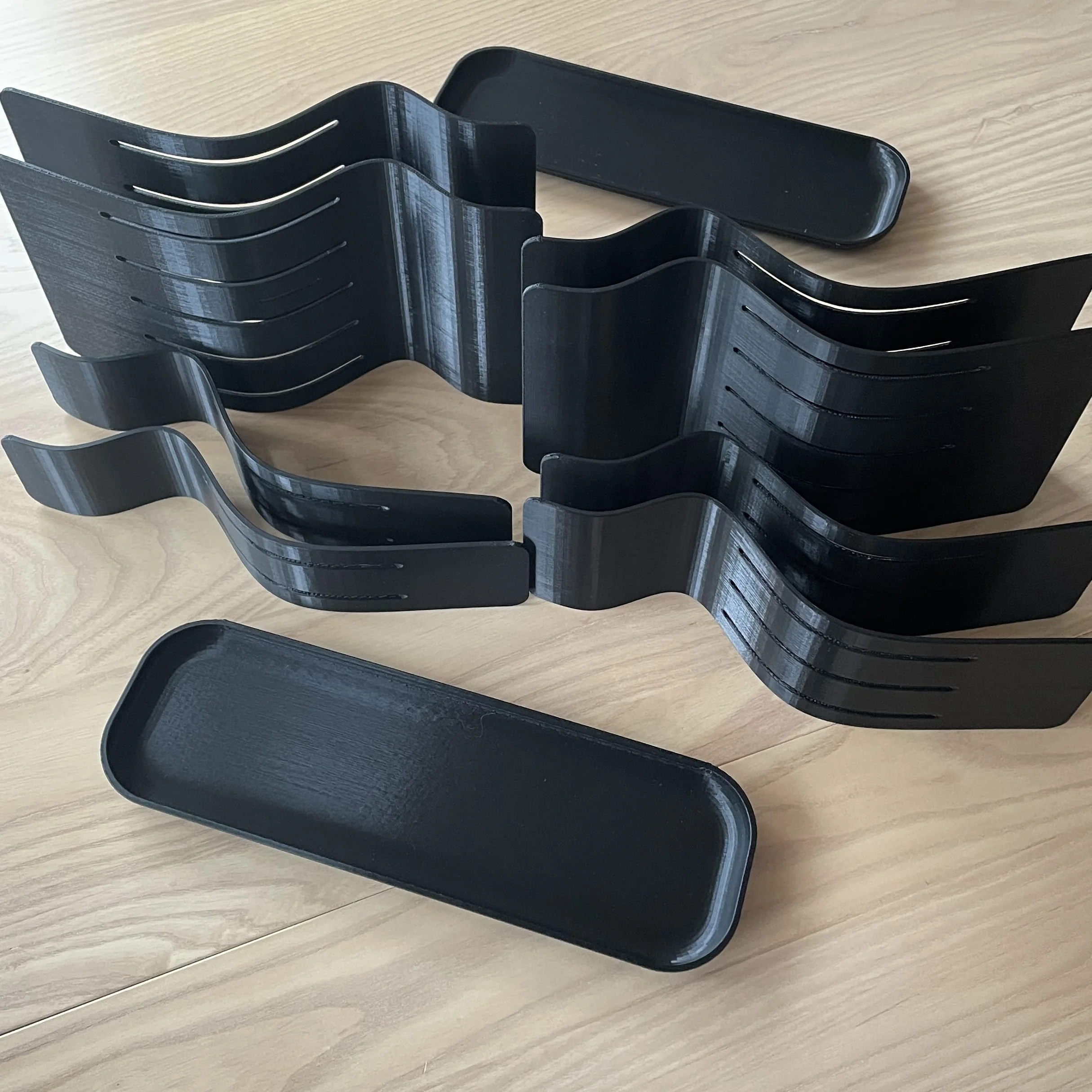
PLA is the most widely used 3D printing filament — and with good reason. This bio-derived plastic (made from cornstarch) prints easily at low temperatures, produces outstanding surface detail, and is available in more colors and finishes than any other filament. Its minimal thermal expansion makes it highly reliable on large prints. PLA is stiff and strong in tension, making it excellent for visual prototypes, architectural mockups, consumer product development, and any part where appearance matters more than mechanical performance. It begins to soften above 60°C and is brittle under impact, so it is not suited for functional or outdoor applications.
Advantages
- Best surface finish and sharpest detail of any standard FDM material
- Minimal warping — consistent results on large parts
- Biodegradable and eco-friendly
- Most cost-effective filament option
Disadvantages
- Softens above ~60°C — not suitable for parts near heat sources or in sunlit environments
- Brittle under sudden impact — cracks rather than flexes
- Degrades under UV and moisture over time — not for permanent outdoor use
PETG — Polyethylene Terephthalate Glycol
Best for:
Functional parts, snap-fit enclosures, mechanical components, indoor/outdoor use
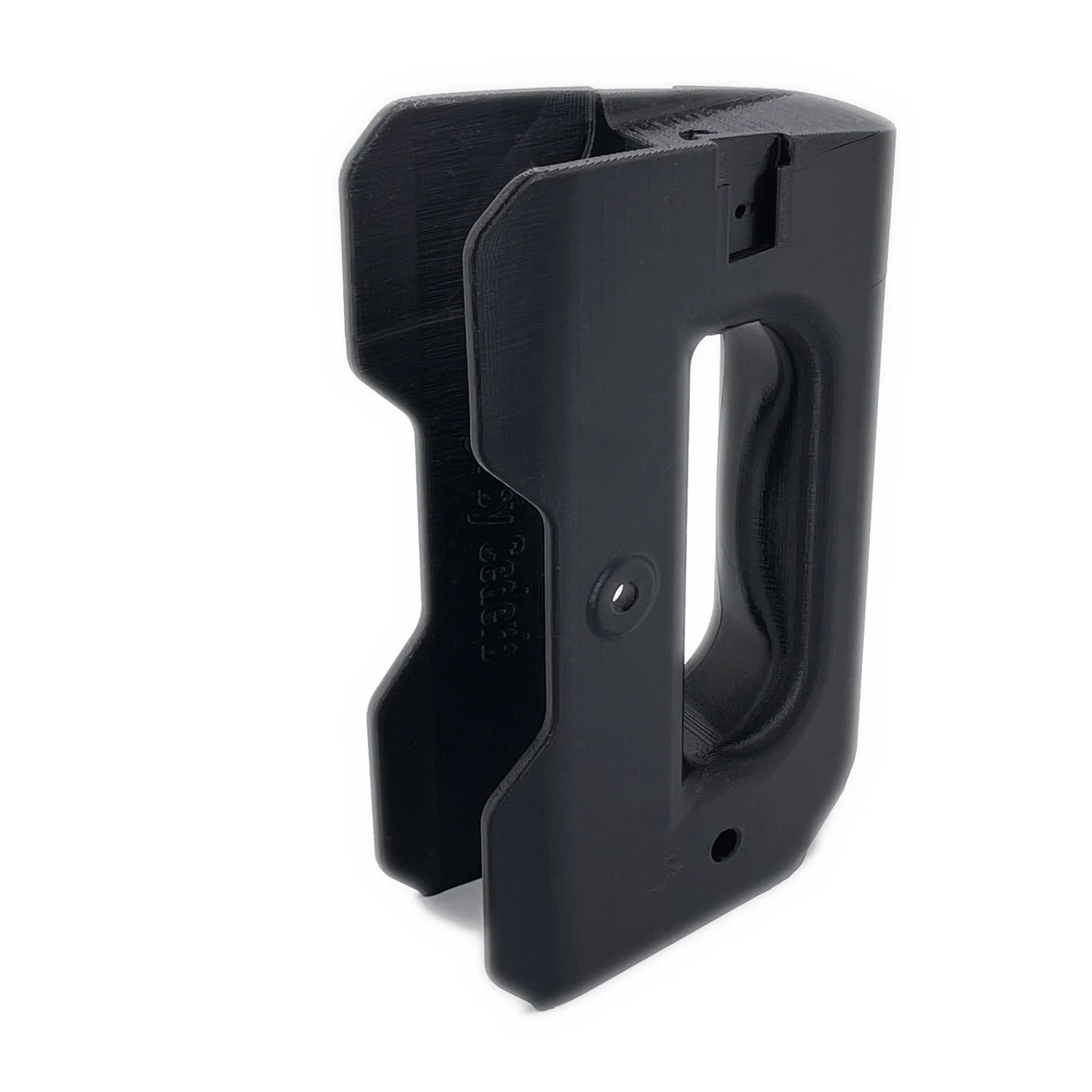
PETG is our most frequently recommended all-around material. It combines the low-warp printability of PLA with noticeably better toughness — PETG flexes and absorbs stress instead of snapping. Heat deflection sits around 70–80°C, and its moisture resistance makes it a reliable choice for parts used in humid or outdoor environments. For businesses ordering custom 3D printed parts in Sweden, PETG covers the widest range of practical applications: brackets, housings, enclosures, cable management, and light mechanical assemblies.
Advantages
- Significantly tougher than PLA — resists impact and flex-cracking
- Negligible warping — reliable on large prints
- Moderate heat resistance (~70–80°C), better than PLA
- Good moisture and chemical resistance once printed
Disadvantages
- Slightly less rigid than PLA — thin walls or long unsupported spans may flex under load
- Surface finish smooth but slightly less sharp than PLA
ABS — Acrylonitrile Butadiene Styrene
Best for:
Functional indoor parts, housings, components requiring post-processing or machining
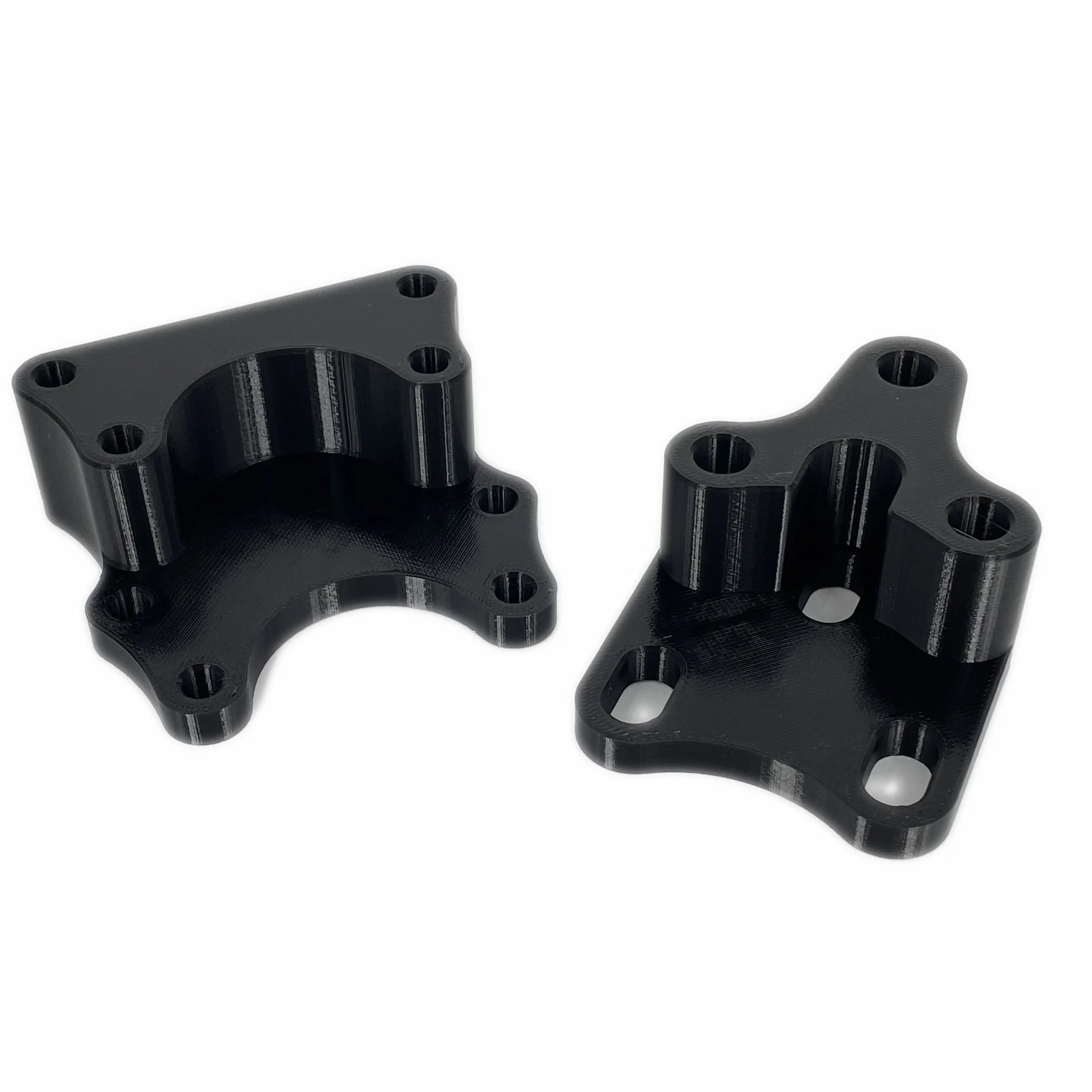
ABS is a well-established engineering plastic with excellent mechanical properties. It offers strong impact resistance, good thermal stability (up to ~100°C), and is one of the few FDM materials that can be effectively post-processed: sanded, primed, and painted to an almost injection-molded finish. We print ABS in enclosed, temperature-controlled chambers to eliminate warping.
Advantages
- High impact resistance and real-world toughness
- Thermal stability up to ~100°C — one of the best in standard filaments
- Good machinability — can be drilled, tapped, and sanded
Disadvantages
- Warping on larger parts can affect dimensional accuracy
- Not UV-stable for prolonged outdoor exposure — consider ASA instead
- Layer lines more visible than on PETG or PLA — post-processing recommended
ASA — Acrylonitrile Styrene Acrylate
Best for:
Outdoor parts, UV-exposed applications, automotive exterior, garden and infrastructure fixtures
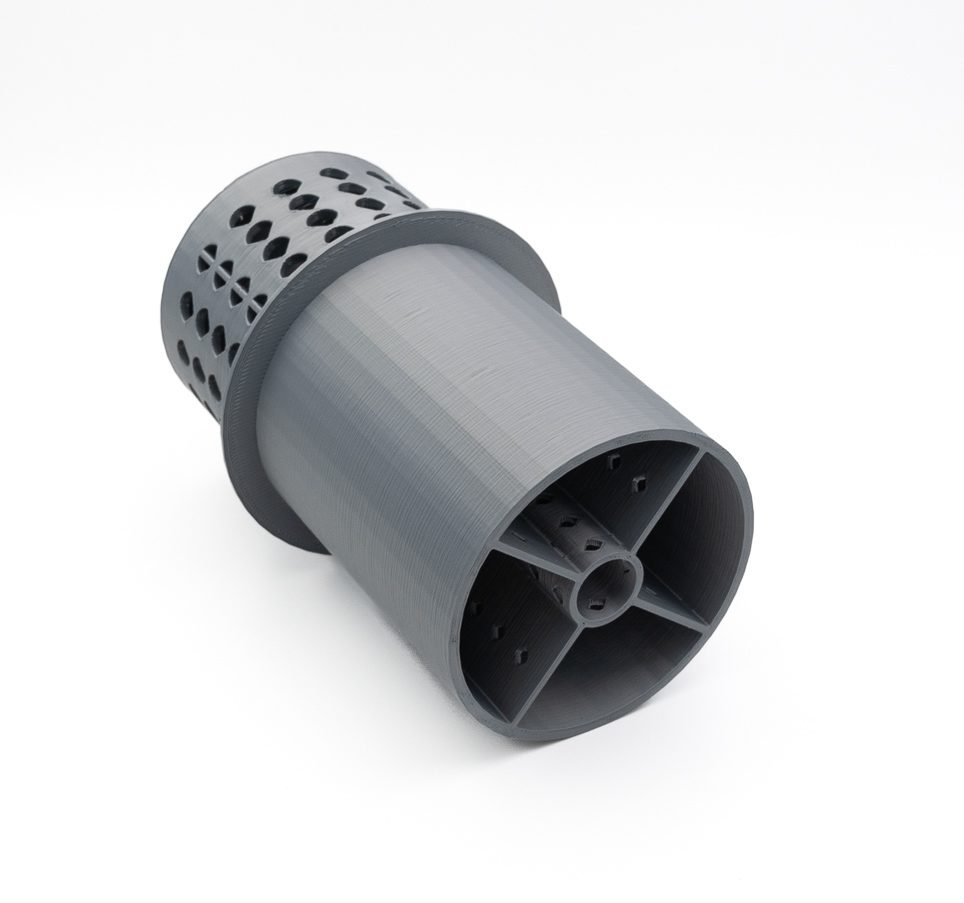
ASA is ABS engineered for the outdoors. It matches ABS in toughness and heat resistance while adding excellent UV and weather resistance — it will not yellow, crack, or become brittle after prolonged sun and rain exposure. If a part will live outside, ASA is the correct choice. Common applications include outdoor enclosures, automotive exterior components (mirrors, clips, trim), garden equipment parts, and signage.
Advantages
- Best UV and weather resistance in our standard filament range
- Impact resistance and toughness comparable to ABS
- Good heat resistance (~90°C)
- Ideal for any application involving prolonged sunlight or outdoor exposure
Disadvantages
- Higher material cost than ABS
- More limited colour range — typically standard colours only
- Warping risk on large flat parts
Nylon — Polyamide 6 (PA6)
Best for:
Gears, bearings, tool handles, load-bearing brackets, wear-exposed components
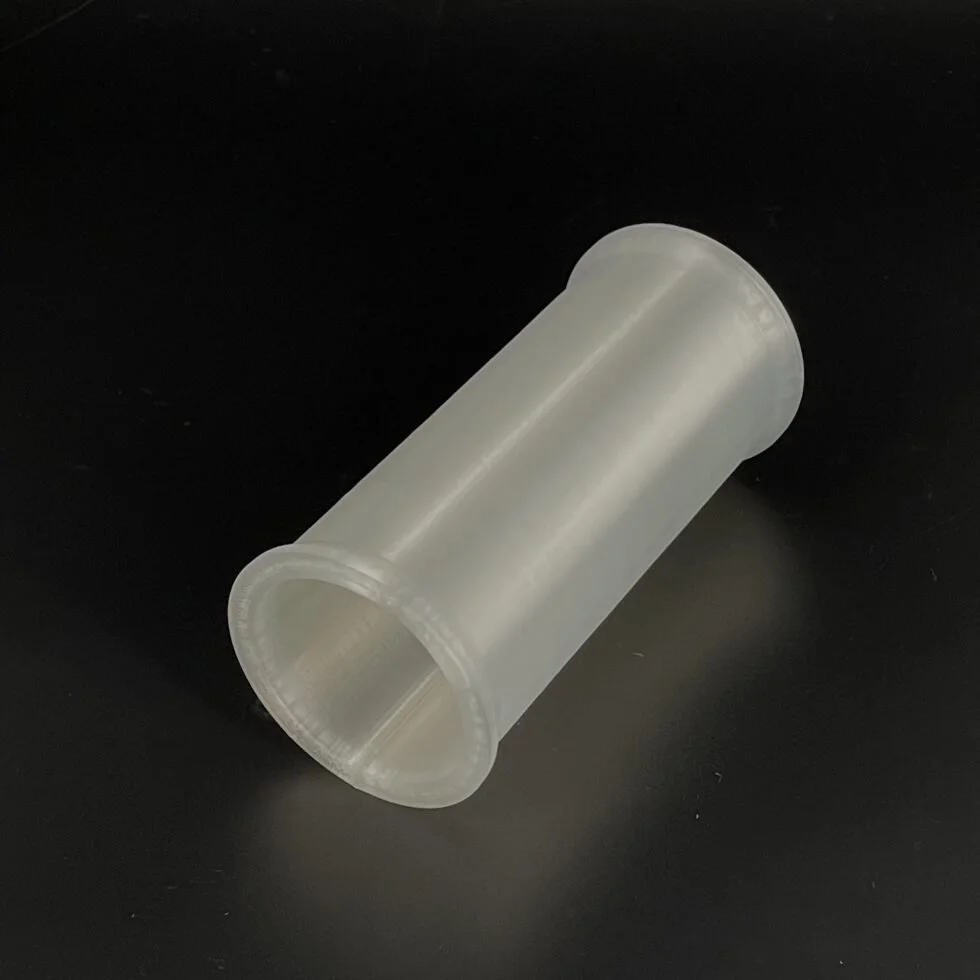
PA6 (Polyamide 6, Nylon) is characterized by its high tensile strength and excellent durability, enabling it to withstand significant mechanical stress and wear. Its ability to absorb impacts and resist abrasion due to its low friction coefficient makes it ideal for parts subjected to challenging conditions such as gears or bearings. It also boasts good resistance to chemicals and high temperatures, expanding its utility in automotive and industrial applications.
Advantages
- Superior tensile strength and toughness for high-stress applications
- High impact resistance — suitable for parts exposed to shocks and vibrations
- Outstanding abrasion and wear resistance — ideal for moving parts
- Good chemical resistance and thermal stability (~100°C)
- Excellent for precision load-bearing components
Disadvantages
- Higher material cost than PLA, PETG, or ABS
- Limited colour options — typically natural (off-white) or black only
- Absorbs moisture over time — surface sealing advisable for wet environments
TPU — Thermoplastic Polyurethane
Best for:
Gaskets, protective covers, grips, wearables, vibration dampers, flexible enclosures
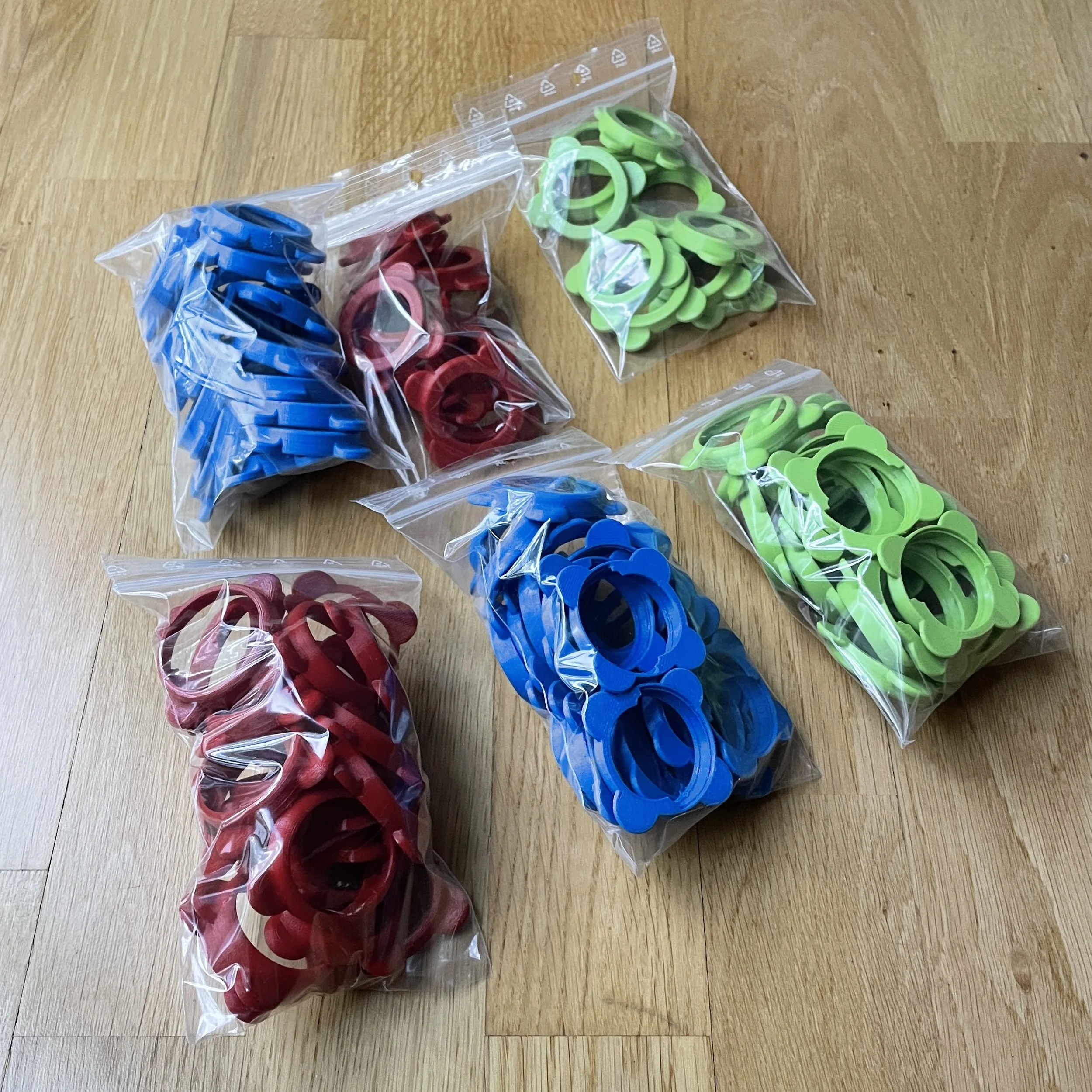
TPU (Thermoplastic Polyurethane) is our flexible filament option — it produces rubber-like parts that bend, compress, and return to shape without cracking. Available at Shore hardness 95A, it strikes a practical balance between flexibility and structural integrity. TPU parts are resistant to oils, greases, and many common chemicals, making them suitable for industrial as well as consumer applications.
Advantages
- High elasticity and flexibility — bends and returns to shape repeatedly
- Good abrasion and tear resistance
- Chemical and oil resistant
- Shore 95A — firm rubber feel, suitable for structural flexible parts
Disadvantages
- Not suitable for rigid structural applications — by design flexible
- Slower print speeds than standard filaments
Polycarbonate (PC)
Best for:
High-load structural parts, high-temperature environments
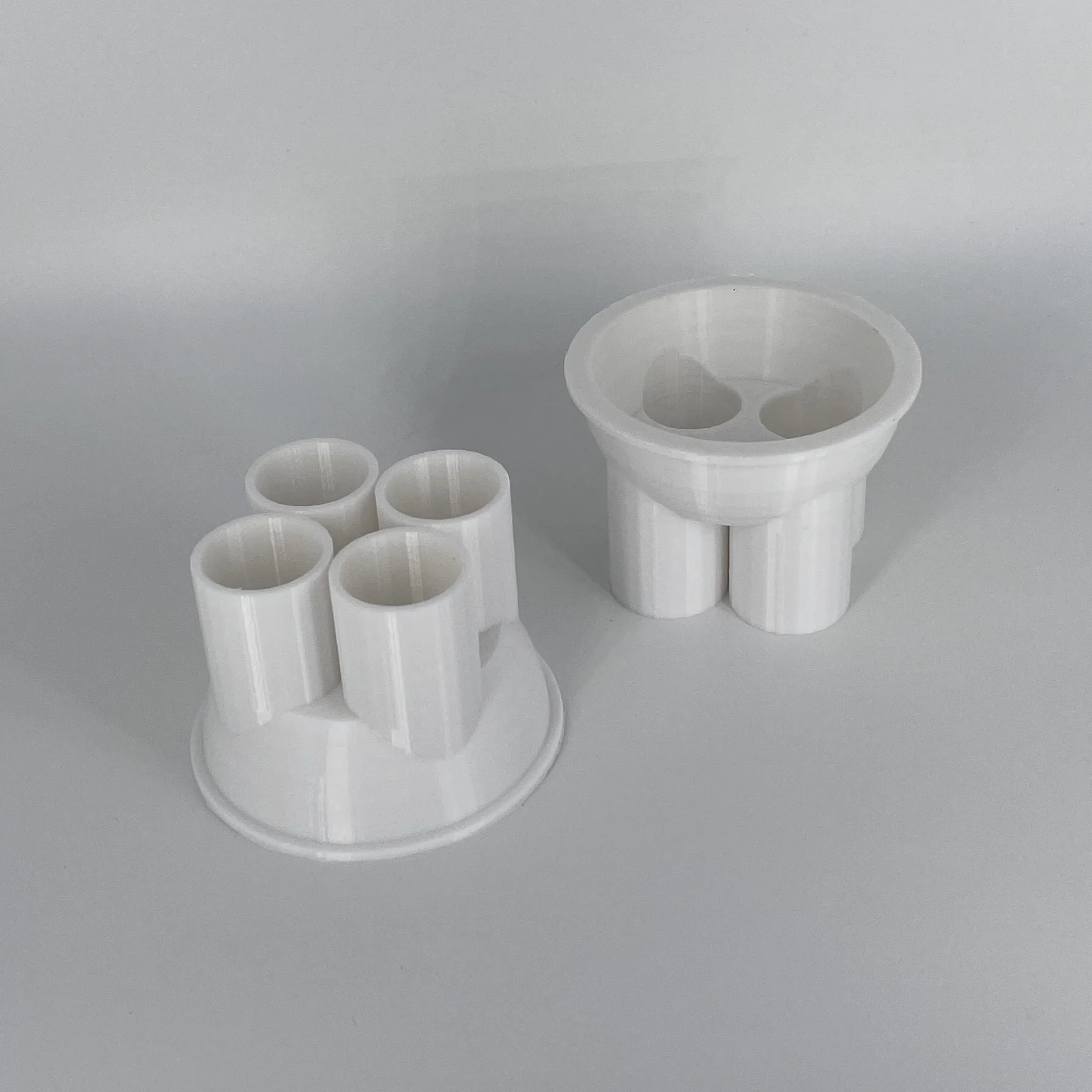
Polycarbonate is one of the strongest and most heat-resistant materials we offer. With a heat deflection temperature of ~150°C and outstanding impact strength, PC is the material of choice when neither ABS nor Nylon is strong enough. It is also optically clear in its natural form, making it suitable for light pipes, covers, and lenses.
Advantages
- Exceptional impact resistance — significantly stronger than ABS
- Very high heat resistance (~150°C HDT)
Disadvantages
- Highest material cost in our standard range
- Requires high print temperatures — not all geometries are suitable
- Sensitive to moisture — must be stored and printed dry